
The Department of Geosciences Unipd ranked among the world’s top 100 in QS Rankings 2026
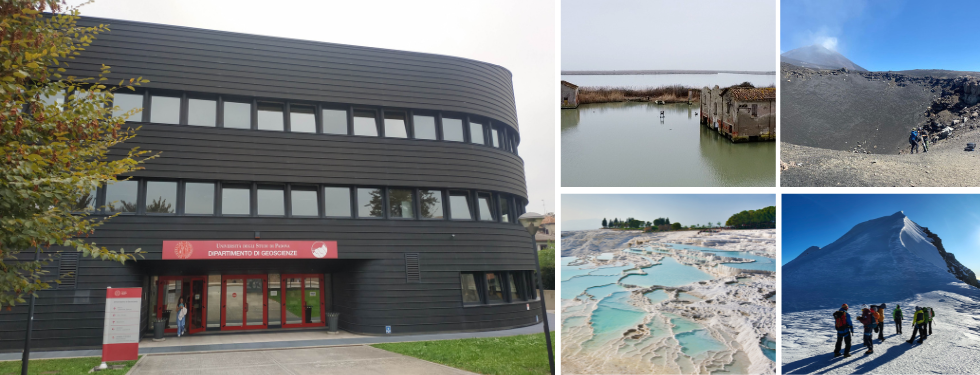
The Department of Geosciences of the University of Padua stands out in the QS World University Rankings by Subject 2026, consolidating its position as a hub of excellence in research and education at both national and international level.
According to the latest rankings released by QS Quacquarelli Symonds, Padua is now ranked among the world’s top 100 universities in Earth Sciences-related disciplines – Geology (88th place), Geophysics (96th place, Earth & Marine Sciences (90th place) – marking a significant rise from 2025, when it was placed in the 101–150 range.
The University of Padua also stands out nationally, securing the top position in Italy in these disciplines and confirming its leadership in the field, ranking above other Italian universities, including Bologna, La Sapienza in Rome, Florence, Milan, Milan-Bicocca and Naples.
The QS World University Rankings by Subject 2026, the latest release in the QS 2026 cycle, is based on the same dataset used for the QS World University Rankings published in June 2025. Universities are evaluated by subject according to several indicators, including academic reputation, employer reputation, citations per paper, H-index and international research networks. The disciplines are grouped into five broad areas: Arts & Humanities, Engineering & Technology, Life Sciences & Medicine, Natural Sciences, and Social Sciences & Management.
The University of Padua also records a very strong overall performance: out of 6,277 institutions analysed globally – of which 1,912 are included in the published results and 300 appear for the first time – the University is ranked in 40 out of the 54 subjects assessed. This result highlights the breadth and quality of the University of Padua’s research and education system.
Here is a statement from Prof. Nicola Surian, Head of the Department: "The results of the QS World University Rankings by Subject 2026 are a source of great satisfaction for our Department. Not only do the results confirm our University’s top position in Italy in the disciplines of ‘Geology’, ‘Geophysics’ and ‘Earth and Marine Sciences’, but they also indicate a significant improvement on the international stage, with these disciplines now ranked within the world’s top 100. Although I am not entirely surprised, given that the Department has long maintained high standards of research quality, these results show us that we are improving and can continue to do so. This improvement in the quality of research and education offered by our Department is the result of various factors. Among these, I would certainly highlight: the recruitment policies we have adopted (the arrival of researchers and professors with a high international profile); significant investment in equipment and laboratory technical staff; and the major renewal of teaching, both in terms of content and internationalisation, at all levels (undergraduate and master’s degrees and PhD programmes). Certainly, these results are the fruit of a collective effort, in a Department where all staff (lecturers, technical and administrative staff, PhD students, post-doctoral researchers) are highly active and motivated."